
Equipment
Power Seating
This page is sponsored by
Many power wheelchairs offer more than one power seating function. While these features can work together, each is designed to meet different needs and provide specific health and functional benefits.
Seat Elevation
Seat elevation raises and lowers the entire seating system while keeping the user in an upright seated position.
Primary benefits include:
- Improving access to countertops, shelves, and other high surfaces – Seat elevation improves functional reach and access to the environment, making many daily activities easier to perform independently.
- Making transfers safer by reducing height differences – Seat elevation can improve transfer safety and reduce caregiver burden.
- Reducing overhead reaching and shoulder strain – Studies have shown that users require significantly less shoulder and neck movement when using seat elevation to perform everyday tasks.
- Improving face-to-face communication by raising users to eye level – Many wheelchair users report improvements in confidence, participation, and overall quality of life when they can interact with others at a similar height.
- Increasing independence at home, work, school, and in the community – Being able to reach service counters, ATMs, office equipment etc., increases independence.
Seat elevation is primarily intended to improve functional reach and participation in everyday activities. Being able to independently complete everyday tasks can reduce reliance on caregivers and increase confidence.
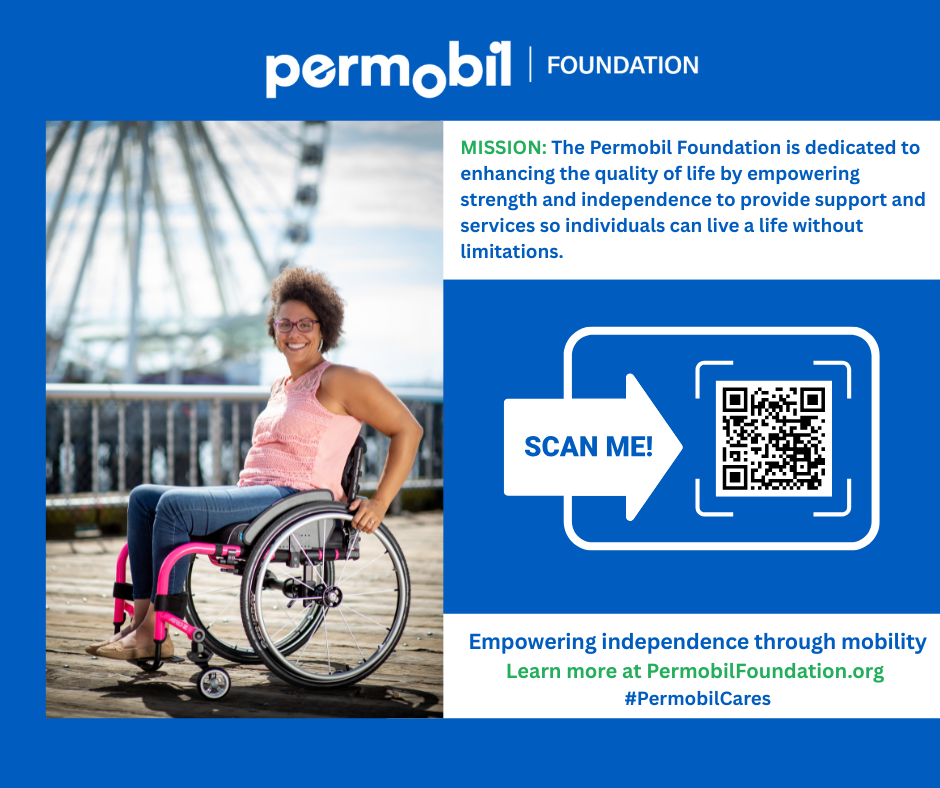
The Permobil Foundation is dedicated to enhancing quality of life by empowering strength and independence through community support, employee engagement, and grant funding. As the philanthropic arm of Permobil, the Foundation partners with nonprofit organizations and agencies to support individuals with mobility limitations. Through product-based assistance, in-kind donations of advanced rehab mobility solutions and accessories, event sponsorships, scholarships, and volunteer engagement, the Foundation helps remove barriers to independence and opportunity. Guided by the belief that independent mobility is a basic human right, the Permobil Foundation is committed to helping individuals live with greater freedom, access, and dignity.

Tilt
Power tilt changes the angle of the entire seating system by tilting the seat and backrest backward together while maintaining the angle between the user’s hips and torso.
Tilt is commonly used to:
- Redistribute pressure to help reduce the risk of pressure injuries
- Promote comfort during prolonged sitting
- Improve positioning and stability
- Help manage fatigue
- Reduce the effort required to maintain an upright posture
Because the user’s position remains the same relative to the seat, tilt minimizes shear forces that can occur when the body slides against the seating surface.
Recline
Power recline changes the angle between the seat and the backrest by lowering the backrest while the seat remains in place.
Recline can help:
- Change hip angle for greater comfort
- Support stretching and positioning
- Assist with personal care activities, such as catheterization or dressing
- Improve tolerance for sitting over longer periods
- Allow users to rest during the day
Unlike tilt, recline can increase shear forces if used alone. For this reason, clinicians often recommend using recline in combination with tilt to maximize comfort while minimizing skin and positioning concerns.
Standing
Some power wheelchairs offer a standing function that gradually raises the user into a supported standing position.
Standing may provide several health and functional benefits, including:
- Improved access to high work surfaces and shelves
- Enhanced participation in conversations at standing height
- Opportunities for weight-bearing through the legs
- Improved circulation
- Stretching of the hips, knees, and ankles
- Potential benefits for bone health and muscle length
- Assistance with certain daily activities
Not every wheelchair user is medically appropriate for standing. A healthcare professional should assess factors such as bone health, joint range of motion, blood pressure, and overall medical status before recommending a standing wheelchair.
Which Power Seating Functions Are Right for You?
The best combination of power seating features depends on your individual needs, goals, and daily activities.
An occupational therapist or physiotherapist can complete a comprehensive seating assessment to determine which functions may benefit you. Some people only require one power seating feature, while others benefit from combining seat elevation, tilt, recline, and standing to improve comfort, skin protection, mobility, and independence.
Many modern power wheelchairs can be configured with multiple power seating functions, allowing users to change position throughout the day to support health, comfort, and participation in everyday life.
Feature
Primary Purpose
Common Benefits
Seat Elevation
Raises and lowers the user
Improves reach, transfers, independence, and social interaction
Tilt
Redistributes body weight
Pressure relief, posture support, comfort, and fatigue management
Recline
Opens the hip angle
Comfort, stretching, positioning, personal care, and resting
Standing
Supports an upright standing position
Functional reach, weight-bearing, circulation, stretching, and participation
With so many options and features available, comprehensive seating assessment can help identify the best support your daily activities and long-term health. If you are considering power seating, speak with a qualified occupational therapist or authorized vendor in Ontario to discuss assessments, funding applications, and customization options.
Our SCIO Service Navigation Coordinators can assist you in connecting with mobility professionals as well as reviewing funding options.
Our Peer Support Coordinators can connect you with a Peer Mentor to help provide practical advice for daily living. The right chair can make a meaningful difference in your comfort, mobility, and overall quality of life.
Empowering independence through mobility. PermobilFoundation.org