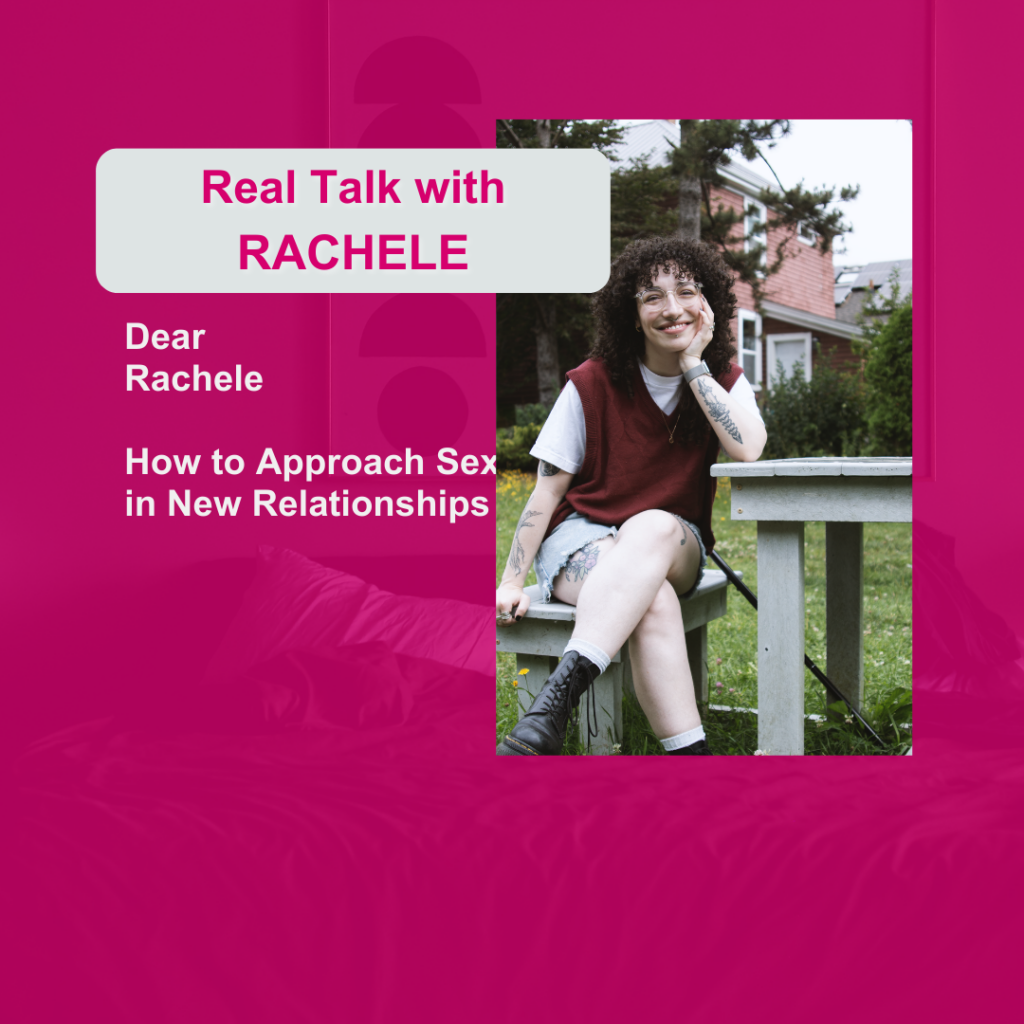
Dear Rachele – How to Approach Sex in New Relationships
*Note that questions have been edited for length, clarity, and respecting privacy.
Reader asks: A few months ago, I had a brief romantic relationship with someone with a newer spinal cord injury. I didn’t know all that much about spinal cord injuries, and learned a lot from SCIO, plus we were able to talk about things openly.
We spent a lot of time discussing how we were going to be intimate, what moving to the “next step” would entail, and any fears or concerns we had about the process. It was a learning process for us both because we were both relatively new to experiencing disabled sex.
Our relationship ended on good terms, but it had me thinking about how I could approach future relationships and continue to be thoughtful of disability.
My question is, what are some initial steps individuals and couples can take to make sure sexual exploration is pleasant, fun and empathetic when disability is involved?
What I love about questions like these is that the answers are likely going to be useful to someone starting a romantic and/or sexual relationship, regardless of if disability is involved. But there are some specific elements that I think can be important when it comes to disability.
Determining Needs, Boundaries and Desires
The first step in any relationship, sexual experience or really in meeting new people in general, is to figure out what people need, what they want, and what is not on the table.
I like this approach because rather than assuming someone has specific things they can or can’t do, this opens the floor to actually discuss what each person in the relationship is even interested in in the first place! And this is just as important for EACH person in the relationship, not just the disabled person.
This makes it more of a natural conversation. We all have activities, words and body parts that we want explored AND that are off limits. Even if you are not disabled, your feet might be really ticklish, and so maybe you don’t want them involved in a sexual experience.
Plus, all parties involved discussing what they want, what their desires are, and what are off limits, offers space for what might be more disability specific. We can discuss positions we want to do and positions we think are not going to work for us physically. We can discuss sexual acts we want to try because we think they are fun and hot, and acts that may not work for us because of our mobility.
Also, remember that your needs, boundaries and desires can change over time! These conversations should take place regularly in relationships, because we can and do change.
Doing your own Research
Something I cannot recommend enough (and it sounds like you are already doing this, reader!) is that if you are getting into a relationship with someone that experiences something you don’t, it’s incredibly important to learn about those experiences without burdening the other person.
In many cases, we might be more than willing to share about our specific experiences and how disability affects us, but that can carry some emotional burden that could easily be avoided with a couple of thoughtful internet searches.
Now, this isn’t to say that you should only learn from the internet, there is always a conversation to be had with the person you want to be in a relationship with to find out how they are personally impacted by whatever you are learning about. But remind yourself that you are not owed their time discussing difficult topics just because you have a relationship with them.
Always check in about people’s capacity for discussing these things, and trust that if you come at it thoughtfully and respectfully, we are likely to respond in kind.
Addressing Power Dynamics
Something I discuss a lot in the consent education work that I do is how power dynamics can impact relationships. My general rule is, if a person has enough power over you to make decisions in your stead, they are not an appropriate sexual or romantic partner. Or in other words, if you don’t feel like you can say ‘no’ for fear of repercussions, then your ‘yes’ doesn’t really mean much.
So, if you are disabled, and you have a homecare nurse or professional caregiver of some sort who starts flirting with you or coming onto you while working with you, take that as inappropriate behaviour and ask them to stop. And if they don’t stop, make sure you report that to whoever is in charge of that service.
However, I also recognise that for a lot of us, our spouses BECOME our primary caregivers after we become disabled. That doesn’t mean we can’t continue to have a relationship with them, but it does mean there are conversations that need to happen to make sure you still have the power to consent to sexual and romantic situations without fear of being denied care.
And from another perspective, if you are newly dating someone, and they are not disabled, there is an inherent social power dynamic that still exists because of the marginalization and oppression people with disabilities experience more broadly.
The existence of these more complicated power dynamics doesn’t necessarily mean that sexual and romantic relationships can’t happen between people with different levels of social power, but it does mean that we have to be aware of these issues and willing to discuss them. Shying away from difficult conversations only ever leads to future conflicts, misunderstandings, and in the worst-case scenario, abuse.
Sex and Romance are Expansive
The last thing I want to leave you with is to remember that sex and romance don’t have singular definitions. In other posts we’ve discussed re-imagining what sex can look like for you, and this is really important to consider when beginning a new relationship and continues to be important as that relationship progresses.
In our society, we are taught a very narrow definitions of what sex and romance can look like, and that definition rarely includes disabled people. So, when we become disabled, we end up having to start from scratch. While frustrating, I think this is an area where we win, because it gives us permission to be creative and expansive in our exploration and understanding of our sexuality, bodies and pleasure.
As a sex educator, I have always been interested in that creativity and exploration, and as a disabled person, I have utilized it constantly. When the thing we are taught doesn’t fit us anymore, we are given permission to think outside the box, but I don’t think one needs to be disabled (nor get permission) to reimagine what sex and romance can look like.
So, reader, good luck in your future relationships and have fun exploring!
Have a question for me? Fill out the contact form on the Real Talk homepage to have your question featured in a future blog post!